Key Takeaways
- Claude Sonnet 5 (codename: Fennec) detected in Google infrastructure with February 3, 2026 release date
- Achieves 80.9% on SWE-Bench—outperforming all existing coding models by 6+ percentage points
- 50% cheaper than Claude Opus 4.5 while delivering superior performance
- 1 million token context window holds entire codebases in working memory
- Dev Team mode: Autonomous multi-agent swarms that self-organize and collaborate
- Trained on Google TPU infrastructure for unprecedented cost efficiency
Table of Contents
What Is Claude Code 5?
Claude Code 5 is the convergence of Claude Sonnet 5 (Anthropic’s February 2026 model) and the Claude Code development platform, creating the first AI system that operates as a complete autonomous development team rather than a single coding assistant.
Unlike GitHub Copilot or Cursor AI that autocomplete code, Claude Code 5 spawns specialized AI agents that work in parallel—frontend developers, backend engineers, QA testers—collaborating like a real software team to deliver production-ready features from a single prompt.
The 404 That Started Everything
On February 2, 2026, a developer calling Google Vertex AI discovered a mysterious model ID:
claude-sonnet-5@20260203
The response? 404 Not Found.
For those who understand infrastructure deployment, this was the smoking gun. The model exists in Google’s systems—it’s just not publicly accessible yet. AI blogger Pankaj Kumar confirmed: Claude Sonnet 5, codename “Fennec,” is deployed and ready for launch, likely on February 3, 2026.
Claude Sonnet 5: Performance That Breaks the Curve
The 80.9% SWE-Bench Breakthrough
Claude Sonnet 5 achieves 80.9% on SWE-Bench, shattering the previous record of 74.4%. This benchmark tests AI on real GitHub issues from popular Python repositories—actual bugs and features that professional developers fix daily.
What this score means in practice:
- Bug fixes across complex, multi-file codebases
- Code refactoring while maintaining functionality
- Test suite creation with edge case coverage
- CI/CD pipeline debugging and optimization
- Regression analysis identifying unintended side effects
Claude Sonnet 5 doesn’t just write code snippets—it delivers shippable code that passes tests and integrates cleanly.
Mid-Tier Price, Flagship Performance
The economics are game-changing:
Pricing: 50% less expensive than Claude Opus 4.5 Performance: Exceeds Opus 4.5 across internal benchmarks Positioning: Anthropic is selling a Sonnet-class model that performs like Opus
How? Google TPU training. While competitors scramble for NVIDIA H100 GPUs, Anthropic optimized Sonnet 5 on Google’s tensor processing units, slashing inference costs without sacrificing capability.
1 Million Token Context: Your Entire Project in Memory
100M tokens = approximately 750,000 words = 3,000 pages of code
This isn’t just bigger—it’s transformative. Claude Code 5 can:
- Ingest your entire application codebase
- Understand architecture across dozens of modules
- Maintain consistency across hundreds of files
- Reference legacy code when implementing new features
For large projects, legacy systems, and what developers affectionately call “spaghetti code,” this context window is the difference between an AI that writes isolated functions and one that understands your entire system.
Early Testing Results
Leaked evaluations show Claude Sonnet 5 excelling at structured visual generation. In one test, the prompt “ASCII world map” produced the most detailed, complete result testers had seen—demonstrating exceptional spatial reasoning and structured output capabilities.
UI rendering tasks and complex code construction also showed significant improvements over Claude Opus 4.5, with faster inference despite the massive context window.
The Dev Team Revolution: Autonomous Agent Swarms
What Is Dev Team Mode?
Dev Team is Claude Code 5’s ability to automatically spawn, organize, and manage multiple specialized AI agents that collaborate to complete software projects.
You don’t configure agents manually. You don’t assign tasks. You give Claude Code a requirement, and it:
1. Analyzes the full scope using 1M token context
2. Automatically generates specialized sub-agents (Team Leader, Frontend Builder, Backend Builder, QA Tester, etc.)
3. Distributes work across agents running in parallel
4. Enables cross-agent communication for problem-solving
5. Produces a complete, tested, deployable solution
This isn’t a coding assistant. It’s a development department.
The Agent Swarm Leak: Claude Code’s Hidden Feature
Developer Mike Kelly revealed on X that Claude Code contains an unreleased Swarm functionality—the foundation of Dev Team mode. He even released a fork called “Claude Sneak Peek” for early testing.
Four Swarm Coordination Patterns
1. Hierarchical
Chief Orchestrator
↓
Team Leads (Frontend, Backend, DevOps)
↓
Specialist Agents (CSS, API, Testing)
2. Dependency
- Task B waits for Task A completion
- Sequential workflows with logical dependencies
- Prevents premature execution
3. Broadcast
- System-wide announcements
- All agents receive updates simultaneously
- Synchronized understanding
4. Messaging System
- Direct agent-to-agent communication
- Collaborative problem-solving
- Cross-validation of approaches
Real Test: From Zero Agents to Eight in One Session
A developer tasked Claude Code: “Create a web frontend for a terminal tool that downloads videos from X (Twitter).”
Initial state: No custom sub-agents defined.
Execution:
1. Claude read plan.md requirements
2. Automatically created: Team Leader, Frontend Builder, Backend Builder, Component Builder, QA Tester
3. All agents began parallel work with real-time status tracking
4. Mid-execution: Claude identified gaps and spawned API Server Agent, CSS Specialist Agent, API Integration Agent
5. Final count: 8 agents, zero human intervention
Output:
- Fully functional web application
- Comprehensive project summary document
- Detailed execution report (project management-grade)
The agents didn’t just code—they self-organized like a real development team scaling to meet project needs.
Why Swarm Mode Isn’t Fully Public
The orchestrator agent has read access to your entire context—every file, conversation, configuration, and secret. This power requires careful security architecture before public release. The capability exists in Claude Code but needs explicit activation.
When fully released, Claude Code won’t just write code—it will autonomously assemble development teams optimized for your specific project.
Claude Code Features: Beyond Autocomplete
Platform Integration
Claude Code CLI
- Terminal-native workflow
- Git integration for version control
- CI/CD pipeline compatibility
- Works with any code editor
Claude Code in Chrome
- Browser-based development agent
- Live preview for web projects
- DOM manipulation and testing
Claude Code in Excel
- Spreadsheet automation
- Data pipeline creation
- Formula and macro generation
Cowork Desktop
- Cross-application file management
- Task automation for non-developers
- Natural language workflows
All platforms share Claude Sonnet 5’s Dev Team capabilities with interfaces optimized for different use cases.
How to Use Claude Code 5
Step 1: Feed Your Entire Codebase
claude-code analyze –path ./your-project
The 1M token context ingests your full repository, understanding structure, dependencies, and architecture.
Step 2: Delegate Complete Features
claude-code build “Add OAuth2 authentication with Google and GitHub providers”
Dev Team mode activates: Backend agent implements OAuth flows, Frontend agent creates login UI, Security agent adds token encryption, QA agent writes integration tests.
Step 3: Monitor Agent Activity
claude-code agents list
claude-code agents inspect [AGENT_ID]
claude-code messages show # View inter-agent communication
Step 4: Iterate in Natural Language
claude-code revise “Use JWT instead of session cookies for auth tokens”
Agents understand the change scope and update all affected files.
What Is Claude Code? The Complete Platform
Claude Code is Anthropic’s command-line tool and development environment that leverages Claude models for autonomous software engineering.
Originally launched as a terminal-based coding assistant, Claude Code evolved with each model generation:
- Early 2025: Code completion and basic refactoring
- Mid 2025: Multi-file understanding with sub-agents
- February 2026: Dev Team mode with autonomous swarms powered by Claude Sonnet 5
The platform generated $1 billion in annualized revenue within six months of launch, demonstrating massive developer adoption.
Anthropic Claude 5 vs. Claude Sonnet 4.5 vs. Claude Opus 4.5
The Model Lineup Explained
Claude Haiku 4.5 (claude-haiku-4-5-20251001)
- Fastest, most cost-effective
- Best for: Quick queries, code reviews, documentation
Claude Sonnet 4.5 (claude-sonnet-4-5-20250929)
- Balanced performance and cost
- Best for: General development, content creation
Claude Opus 4.5 (claude-opus-4-5-20251101)
- Maximum capability, highest cost
- Best for: Complex reasoning, research, creative work
Claude Sonnet 5 (claude-sonnet-5@20260203)
- Opus-level performance at Sonnet pricing
- 80.9% SWE-Bench (industry-leading)
- 1M token context vs. Opus 4.5’s ~500K
- 50% cheaper than Opus 4.5
- Best for: Software engineering, autonomous development, production systems
The strategic positioning is unprecedented: flagship capability at mid-tier cost.
Evolution: Claude Sonnet 4 → 4.5 → 5
| Feature | Sonnet 4 | Sonnet 4.5 | Sonnet 5 |
| Context Window | 200K tokens | 500K tokens | 1M tokens |
| SWE-Bench Score | ~45% | ~65% | 80.9% |
| Sub-Agents | None | Manual config | Auto-generated |
| Dev Team Mode | No | No | Yes |
| Training Infrastructure | Unknown | NVIDIA GPUs | Google TPU |
| Cost vs. Opus | N/A | Standard | 50% cheaper |
Each generation represents a fundamental capability leap, not incremental improvement.
The February 2026 AI Coding War
Strategic Timing: Super Bowl Week
Claude Sonnet 5’s February 3 release date isn’t random. Super Bowl LX airs February 8, 2026—the year’s largest marketing event with 100+ million viewers.
Anthropic is positioned to:
- Launch Claude Sonnet 5 on February 3
- Run Super Bowl ads featuring Cowork (their consumer tool)
- Capture mainstream attention while technical audiences test Dev Team mode
Meanwhile, OpenAI CEO Sam Altman announced February as “Codex suite launch month”—setting up a direct head-to-head battle.
Market Position: Anthropic’s Momentum
Menlo Ventures Q4 2025 Data:
- Anthropic: 40% enterprise market share
- OpenAI: 27% enterprise market share
- Google: 21% enterprise market share
Funding: Over $10 billion raised in January 2026, $350 billion valuation, potential $20 billion total round
Revenue: Claude Code hit $1 billion annual revenue in six months
New Products: Cowork desktop tool, Claude in Chrome, Claude in Excel driving adoption beyond developers
Anthropic isn’t just competing—they’re leading in enterprise adoption while expanding to consumers.
Competitive Landscape
Expected February 2026 releases:
- OpenAI: GPT-5.3, expanded Codex suite
- Google: Gemini 3 Pro, Gemini 3 Flash G
- xAI: Grok 4.2 with coding features
- Anthropic: Claude Sonnet 5, Dev Team mode, Swarm functionality
The race isn’t just about better models—it’s about autonomous development systems that fundamentally change how software gets built.
Troubleshooting Claude Code 5
Context Window Management
Problem: Project exceeds 1M tokens
Solution:
- Create .claudeignore to exclude node_modules, build artifacts, test fixtures
- Segment monorepos into focused modules
- Use context pruning: claude-code context optimize
Agent Coordination Issues
Problem: Too many agents created, slowing execution
Solution:
claude-code config set max-agents 6
claude-code task “Consolidate similar agents”
Problem: Agents waiting on each other (deadlock)
Solution:
claude-code agents dependency-graph # Visualize dependencies
claude-code agents reorder AGENT_A before AGENT_B
Code Style Consistency
Problem: Different agents use varying conventions
Solution:
# Reference your linting config
claude-code style set –config .eslintrc.json
claude-code style set –prettier .prettierrc
All agents will follow your project’s formatting rules.
Security Concerns
Problem: Worried about code privacy
Solution:
- Use enterprise agreements with data isolation guarantees
- Deploy via Google Cloud Vertex AI for additional privacy controls
- Code submitted to Claude is not used for model training per Anthropic’s policy
- For maximum security, review Anthropic’s Trust Portal documentation
Bonus: Gaga AI for Developer Video Content
While Claude Code 5 builds your software, Gaga AI solves another developer challenge: creating engaging video content for project demos, tutorials, and technical marketing.
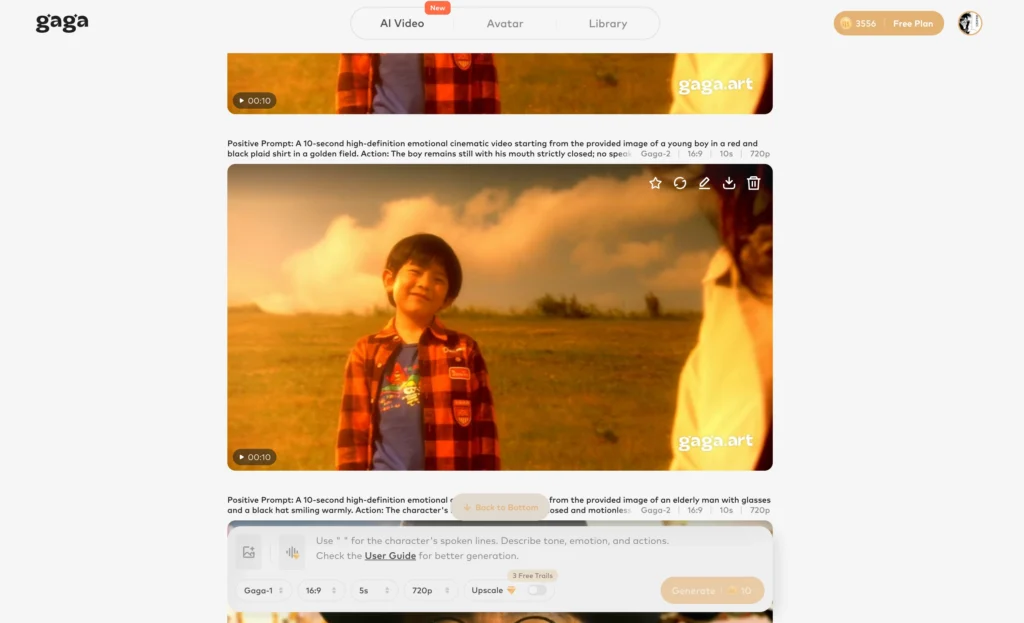
Gaga AI Features for Developers
Image to Video AI
Transform static screenshots, architecture diagrams, or UI mockups into animated walkthroughs. Perfect for converting GitHub README files into demo videos.
Video and Audio Infusion
Combine screen recordings with voiceover narration. Gaga AI synchronizes timing and adds professional transitions automatically—no video editing skills required.
AI Avatar
Generate a photorealistic presenter to explain your code, demonstrate your API, or deliver technical talks without appearing on camera yourself.
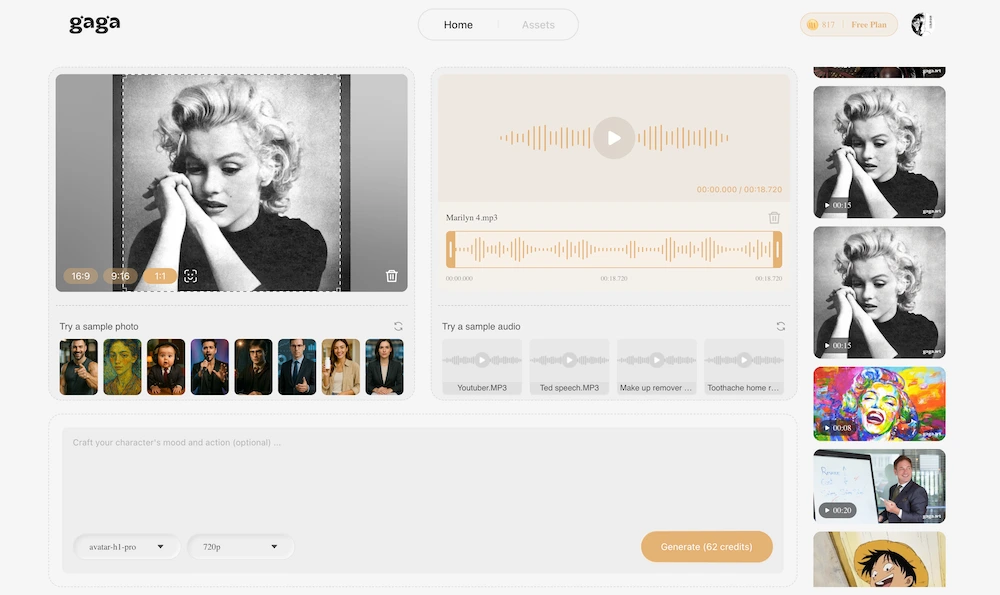
AI Voice Clone
Record 30 seconds of your voice, then generate unlimited narration for documentation videos, tutorials, or product demos. Consistent voice across all content without repeated recording sessions.
Text-to-Speech (TTS)
Write a script, select a voice profile, and Gaga AI generates natural-sounding narration supporting technical terminology pronunciation in multiple languages.
Automated Release Video Pipeline
Combine Claude Code 5 and Gaga AI for complete content automation:
1. Claude Code builds your feature → Complete, tested code
2. Claude generates release notes → Documentation and change log
3. Gaga AI creates demo video → Animated walkthrough with voiceover
4. Deploy to YouTube/Twitter → Automated distribution
Every code deployment becomes a multimedia announcement with zero manual video editing.
FAQ: Everything About Claude Code 5
When will Claude Sonnet 5 be released?
Infrastructure logs point to February 3, 2026 as the internal date. Public access will likely follow a staggered rollout: Pro/Team subscribers first, then broader availability over subsequent weeks.
How much does Claude Code 5 cost?
Claude Sonnet 5 costs approximately 50% less than Claude Opus 4.5 on a per-token basis. Expected pricing: ~$3 per million input tokens, ~$15 per million output tokens (subject to official announcement). The Claude Code CLI is free—you pay only for API usage.
Can Claude Code 5 replace human developers?
No. Claude Code 5 excels at implementing well-defined features, generating boilerplate, writing tests, fixing bugs, and handling routine engineering work. It cannot make strategic architectural decisions, negotiate requirements with stakeholders, or navigate organizational complexity. Think of it as an exceptionally skilled junior-to-mid development team that needs direction from senior engineers.
What is the SWE-Bench score and why does 80.9% matter?
SWE-Bench tests AI on real GitHub issues from popular open-source projects. An 80.9% score means Claude Sonnet 5 successfully resolves over 80% of actual bugs and feature requests that professional developers work on daily. The previous record was 74.4%, making this a 6+ percentage point leap in practical coding ability.
How does the 1 million token context work?
One million tokens equals roughly 750,000 words or 3,000 pages of code. For reference, a typical medium-sized web application (50,000 lines of code) fits comfortably in this window. Claude Code 5 can hold your entire project in working memory, understanding architecture, dependencies, and code relationships across all files simultaneously.
Is Dev Team mode available now?
Dev Team capabilities exist in Claude Code but require the Swarm feature, which is currently in limited preview. Early access users like Mike Kelly have demonstrated it publicly. Full public release timing depends on security auditing of the orchestrator agent’s context access.
What programming languages does Claude Sonnet 5 support?
All major languages: Python, JavaScript/TypeScript, Java, C++, C#, Go, Rust, Ruby, PHP, Swift, Kotlin, Scala, and more. The model was trained on diverse code repositories spanning the entire development ecosystem.
How does Claude Code 5 compare to GitHub Copilot?
| Capability | GitHub Copilot | Claude Code 5 |
| Context | ~8K tokens (current file) | 1M tokens (entire project) |
| Architecture | Single autocomplete | Multi-agent swarm |
| Output | Code snippets | Complete features with tests |
| Autonomy | Requires constant direction | Self-organizes and executes |
| Testing | Manual | Auto-generated test suites |
Copilot assists; Claude Code 5 delivers.
Can I use Claude Code offline?
No. Claude Code requires internet connectivity to access Claude Sonnet 5 via Anthropic’s API. All inference happens on Anthropic’s servers.
Will my code be used to train Claude models?
No. Anthropic’s policy explicitly states that code submitted through the API or Claude Code is not used for model training. Enterprise customers can additionally deploy through Google Cloud Vertex AI with contractual data isolation guarantees.
What is the difference between Claude Code and Claude Sonnet 5?
Claude Sonnet 5 is the AI model—the brain that understands code and generates solutions.
Claude Code is the development platform—the CLI, integrations, agent orchestration system, and tooling that uses Claude Sonnet 5 to perform software engineering tasks.
Think of Sonnet 5 as the engine, Claude Code as the complete vehicle.
Conclusion: The Software Engineering Inflection Point
Claude Code 5 represents more than an improved coding assistant. It’s a paradigm shift from “AI that helps you code” to “AI that assembles development teams on demand.”
The numbers tell the story:
- 80.9% SWE-Bench: Best-in-industry practical coding ability
- 1M token context: Entire projects in working memory
- 50% cost reduction: Flagship performance at mid-tier pricing
- Autonomous agent swarms: Self-organizing development teams
- $1B revenue in 6 months: Proven developer adoption
With over $10 billion in fresh funding, 40% enterprise market share, and a Super Bowl week launch strategy, Anthropic isn’t just competing in the AI coding war—they’re redefining what “coding with AI” means.
Whether Claude Sonnet 5 marks “the end of junior developer roles” or “the beginning of 10x developer productivity” depends on how teams integrate these tools. What’s certain: February 3, 2026 may be remembered as the day software development fundamentally changed.
The dev team of the future doesn’t take vacation days, doesn’t have meetings, and spawns new specialists on demand. It just needs you to tell it what to build.